Many students planning to study abroad often ask “SAT exam is what for purpose?” Understanding the purpose of the SAT exam is very important before deciding whether to take it.
The SAT exam is not just another test—it is a standardized assessment that helps universities evaluate a student’s academic readiness, reasoning ability, and college-level skills. This guide explains the exact purpose of the SAT exam, its benefits, and why millions of students take it every year.
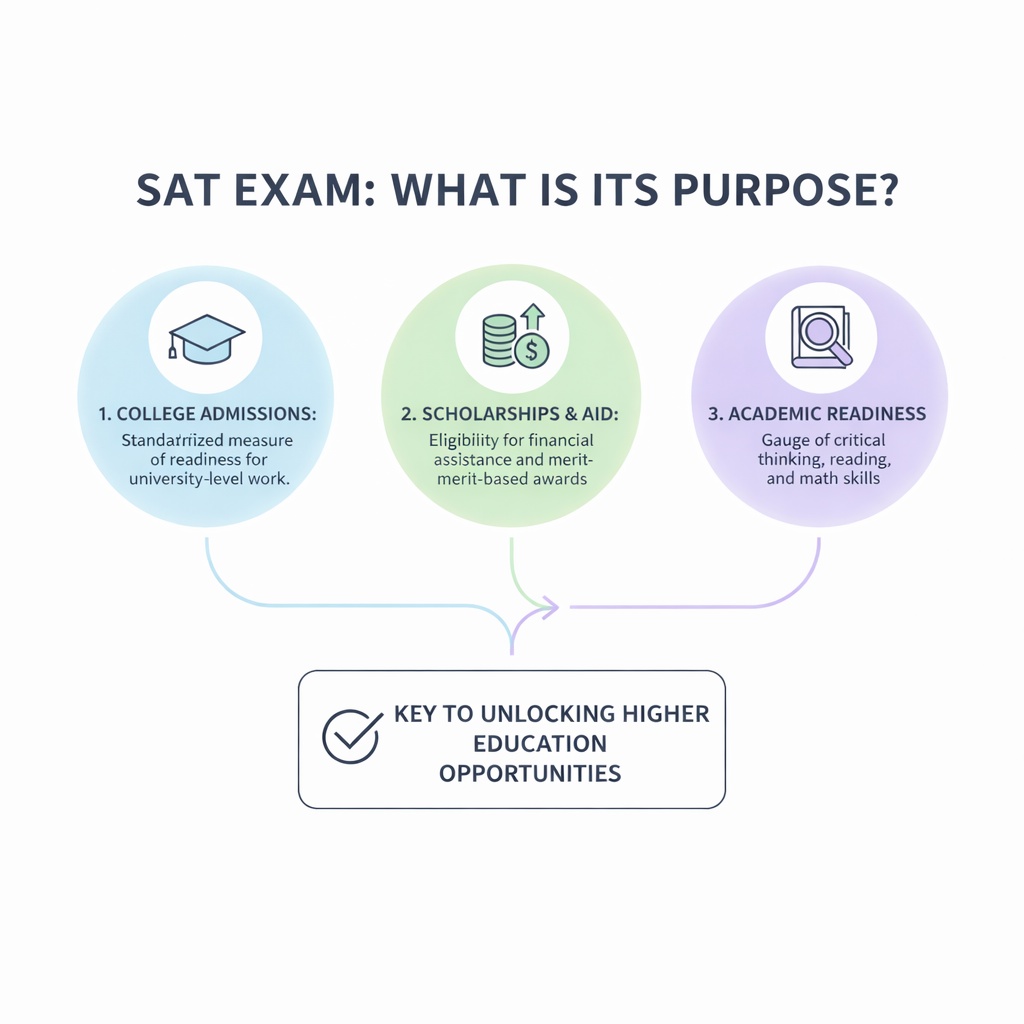
SAT exam is what for purpose?
The primary purpose of the SAT exam is to help colleges and universities assess whether a student is ready for undergraduate education.
Since students come from different schools, boards, and countries, the SAT provides a common evaluation standard that allows universities to compare applicants fairly.
The SAT exam is conducted by College Board and is widely accepted by universities worldwide.
Why Was the SAT Exam Created?
The SAT exam was created to solve one major problem in college admissions.
Main reason behind SAT:
- Different grading systems across schools
- Variation in curriculum difficulty
- Lack of a common comparison scale
The SAT helps colleges make fair and data-driven admission decisions.
Purpose of SAT exam in college admissions
One of the biggest purposes of the SAT exam is its role in college admissions.
How SAT helps colleges:
- Measures academic readiness
- Predicts college performance
- Standardizes applicant evaluation
- Supports merit-based admissions
SAT scores are used along with grades, essays, and extracurricular activities.
Let’s Get Started
SAT exam purpose for students
For students, the SAT exam serves multiple purposes beyond admission.
Why students take SAT exam:
- To strengthen college applications
- To stand out among applicants
- To qualify for scholarships
- To apply to international universities
A strong SAT score can significantly improve a student’s chances.
SAT exam is what for purpose in study abroad?
For students planning to study abroad, the SAT exam plays a crucial role.
SAT purpose for international students:
- Accepted by US and global universities
- Reduces dependency on board marks
- Improves admission chances
- Helps in scholarship consideration
Many international universities rely on SAT scores for academic assessment.
SAT exam purpose for scholarships
Another important purpose of the SAT exam is scholarship eligibility.
How SAT helps in scholarships:
- Merit-based scholarships require SAT scores
- Higher scores increase funding chances
- Helps universities award academic grants
Students with strong SAT scores often receive better financial aid offers.
SAT exam purpose in Test-Optional Colleges
Even in test-optional colleges, the SAT exam still has value.
Why SAT still matters:
- Optional does not mean irrelevant
- Strong scores enhance application strength
- Compensates for low GPA in some cases
Submitting a good SAT score can be an advantage.
SAT exam purpose compared to school exams
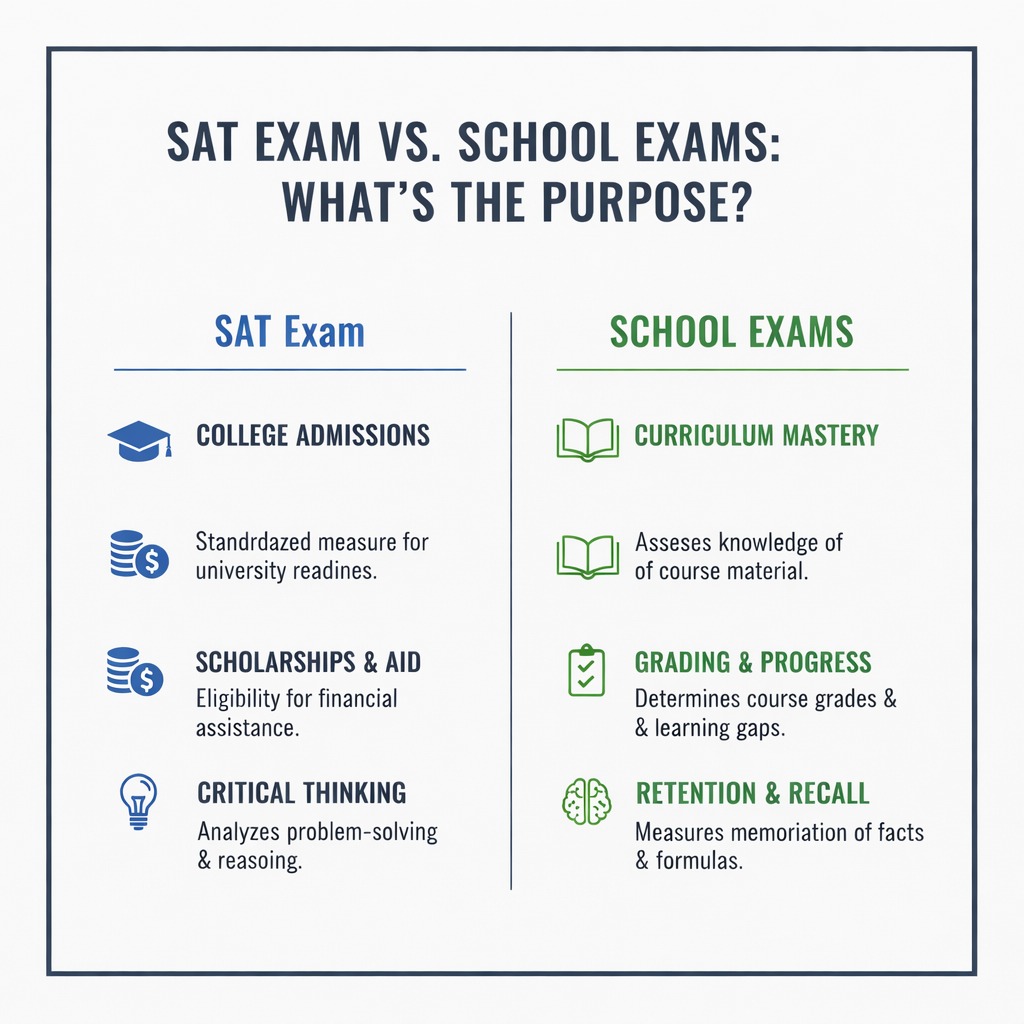
School exams test curriculum knowledge, while the SAT tests skills.
Difference in purpose:
- School exams: Memory + syllabus
- SAT exam: Logic + reasoning + application
That is why universities trust SAT scores for predicting success.
SAT Exam Is what for purpose in career planning?
While the SAT is not a job exam, it indirectly affects career paths.
Career-related benefits:
- Entry into top universities
- Access to better academic networks
- Long-term professional opportunities
A good college often leads to better career outcomes.
SAT exam purpose vs ACT Exam
Both SAT and ACT serve similar purposes, but SAT focuses more on reasoning.
SAT purpose highlights:
- Logical problem-solving
- Evidence-based reading
- Math reasoning
Students choose SAT based on comfort and university requirements.
Is SAT exam mandatory or optional?
The SAT exam is not mandatory for all universities.
Current admission trends:
- Test-optional
- Test-flexible
- Holistic admissions
However, the purpose of SAT remains relevant for competitive applications.
SAT exam validity and long-term Use
SAT scores are valid for 5 years.
Long-term usefulness:
- Can be reused for multiple applications
- Helpful for gap-year students
- Accepted by various institutions
This adds long-term value to the exam.
Who Benefits Most from SAT exam?
SAT exam benefits:
- International students
- Students with strong reasoning skills
- Scholarship seekers
- Applicants to competitive universities
For such students, the SAT exam serves a strategic purpose.
Common Misunderstandings About SAT purpose
Many students misunderstand the SAT exam.
Myths vs reality:
- ❌ SAT is only for toppers
- ❌ SAT guarantees admission
- ❌ SAT is only for USA
✔️ SAT is a supporting evaluation tool, not a guarantee.
Final Answer: SAT exam is what for purpose?
The SAT exam is taken to:
- Evaluate college readiness
- Standardize student assessment
- Support fair admissions
- Improve scholarship chances
- Strengthen global university applications
Understanding the purpose of SAT exam helps students make informed decisions and plan their academic future effectively.
SAT Exam Is What for Purpose?
The primary purpose of the SAT exam is to help colleges and universities assess whether a student is ready for undergraduate education.
Since students come from different schools, boards, and countries, the SAT provides a common evaluation standard that allows universities to compare applicants fairly.
The SAT exam is conducted by College Board and is widely accepted by universities worldwide.
Why Was the SAT Exam Created?
The SAT exam was created to solve one major problem in college admissions.
Main reason behind SAT:
- Different grading systems across schools
- Variation in curriculum difficulty
- Lack of a common comparison scale
The SAT helps colleges make fair and data-driven admission decisions.
Purpose of SAT Exam in College Admissions
One of the biggest purposes of the SAT exam is its role in college admissions.
How SAT helps colleges:
- Measures academic readiness
- Predicts college performance
- Standardizes applicant evaluation
- Supports merit-based admissions
SAT scores are used along with grades, essays, and extracurricular activities.
SAT Exam Purpose for Students
For students, the SAT exam serves multiple purposes beyond admission.
Why students take SAT exam:
- To strengthen college applications
- To stand out among applicants
- To qualify for scholarships
- To apply to international universities
A strong SAT score can significantly improve a student’s chances.
SAT Exam Is What for Purpose in Study Abroad?
For students planning to study abroad, the SAT exam plays a crucial role.
SAT purpose for international students:
- Accepted by US and global universities
- Reduces dependency on board marks
- Improves admission chances
- Helps in scholarship consideration
Many international universities rely on SAT scores for academic assessment.
SAT Exam Purpose for Scholarships
Another important purpose of the SAT exam is scholarship eligibility.
How SAT helps in scholarships:
- Merit-based scholarships require SAT scores
- Higher scores increase funding chances
- Helps universities award academic grants
Students with strong SAT scores often receive better financial aid offers.
SAT Exam Purpose in Test-Optional Colleges
Even in test-optional colleges, the SAT exam still has value.
Why SAT still matters:
- Optional does not mean irrelevant
- Strong scores enhance application strength
- Compensates for low GPA in some cases
Submitting a good SAT score can be an advantage.
SAT Exam Purpose Compared to School Exams
School exams test curriculum knowledge, while the SAT tests skills.
Difference in purpose:
- School exams: Memory + syllabus
- SAT exam: Logic + reasoning + application
That is why universities trust SAT scores for predicting success.
SAT Exam Is What for Purpose in Career Planning?
While the SAT is not a job exam, it indirectly affects career paths.
Career-related benefits:
- Entry into top universities
- Access to better academic networks
- Long-term professional opportunities
A good college often leads to better career outcomes.
SAT Exam Purpose vs ACT Exam
Both SAT and ACT serve similar purposes, but SAT focuses more on reasoning.
SAT purpose highlights:
- Logical problem-solving
- Evidence-based reading
- Math reasoning
Students choose SAT based on comfort and university requirements.
Is SAT Exam Mandatory or Optional?
The SAT exam is not mandatory for all universities.
Current admission trends:
- Test-optional
- Test-flexible
- Holistic admissions
However, the purpose of SAT remains relevant for competitive applications.
SAT Exam Validity and Long-Term Use
SAT scores are valid for 5 years.
Long-term usefulness:
- Can be reused for multiple applications
- Helpful for gap-year students
- Accepted by various institutions
This adds long-term value to the exam.
Who Benefits Most from SAT Exam?
SAT exam benefits:
- International students
- Students with strong reasoning skills
- Scholarship seekers
- Applicants to competitive universities
For such students, the SAT exam serves a strategic purpose.
Common Misunderstandings About SAT Purpose
Many students misunderstand the SAT exam.
Myths vs reality:
- ❌ SAT is only for toppers
- ❌ SAT guarantees admission
- ❌ SAT is only for USA
✔️ SAT is a supporting evaluation tool, not a guarantee.
Final Answer: SAT Exam Is What for Purpose?
The SAT exam is taken to:
- Evaluate college readiness
- Standardize student assessment
- Support fair admissions
- Improve scholarship chances
- Strengthen global university applications
FAQs: SAT Exam Is What for Purpose
SAT exam is what for purpose in simple words?
The SAT exam is taken to help colleges decide if a student is ready for undergraduate studies.
Is SAT exam only for US universities?
No, SAT scores are accepted by universities in many countries worldwide.
Does SAT exam help in scholarships?
Yes, many scholarships consider SAT scores for eligibility.
Is SAT exam compulsory?
No, it is optional for many universities, but still beneficial.
Can SAT exam replace school marks?
No, SAT supports applications but does not replace academic records.