What GMAT Score is Good? Complete Guide for MBA Aspirants
Many MBA aspirants often ask what GMAT score is good for getting admission into top business schools. The answer depends on several factors such as the target university, program competitiveness, and the candidate’s overall academic and professional profile.
Understanding what GMAT score is considered good helps students set realistic goals and plan their GMAT preparation more effectively.
A good GMAT score generally falls within a range that makes a candidate competitive among other applicants. While there is no fixed “perfect” score, most business schools consider scores above a certain level as strong indicators of academic readiness.
A GMAT score above 650 is considered competitive for many universities
Scores above 700 are preferred by top-tier business schools
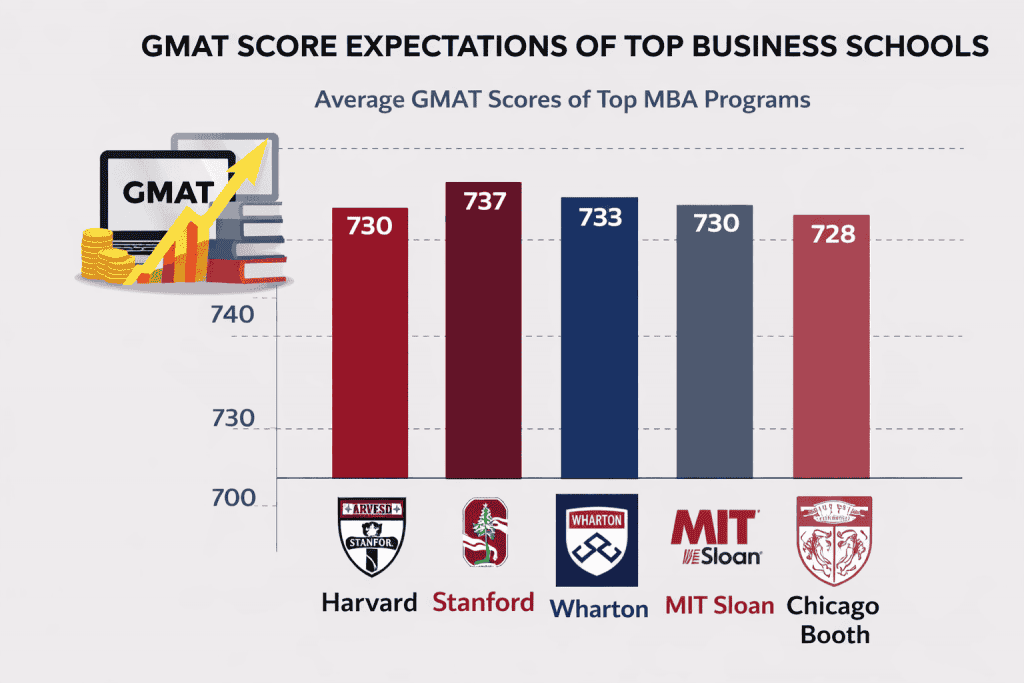
Highly selective MBA programs often see average scores between 720–740
The definition of a good GMAT score varies depending on the institution and program.
Average GMAT Score Explained
The average GMAT score worldwide typically lies around the mid-range of the scoring scale.
Global average GMAT score: Around 550–600
Candidates scoring above the average stand a better chance during admissions
Business schools compare scores within their applicant pool, not globally
Scoring higher than the average strengthens a candidate’s application and improves shortlisting chances
What is in this article
GMAT Score Expectations of Top Business Schools
Top MBA colleges often publish their average GMAT scores for admitted students. These scores provide a benchmark for aspirants aiming for competitive programs.
Top US and European business schools: 700+ GMAT score
Mid-tier universities: 620–680 GMAT score
Emerging MBA programs: 550–600 GMAT score
However, a slightly lower GMAT score can still be acceptable if the candidate has strong work experience, academic background, or leadership achievements.
Is GMAT Score the Only Admission Factor?
While the GMAT score is important, it is not the only factor considered by business schools. Admissions committees evaluate applications holistically.
Other important factors include:
Academic performance
Work experience
Statement of purpose
Letters of recommendation
Leadership and extracurricular achievements
A balanced profile can compensate for a slightly lower GMAT score.
GMAT Score Comparison Based on MBA College Tier
GMAT Score Range
MBA College Level
Admission Chances
720 – 740+
Top Global B-Schools (Harvard, Stanford, INSEAD Level)
Very High
680 – 710
Top 50 Global MBA Colleges
High
620 – 670
Good Tier 2 Universities
Moderate – High
550 – 610
Emerging / Mid Tier Programs
Moderate
Below 550
Limited Competitive Options
Low
How to Improve a GMAT Score
Improving a GMAT score requires a structured and disciplined approach. Students who follow a clear preparation strategy often achieve better results.
In this video, we explain a result-driven GMAT preparation strategy, including how to plan your studies efficiently, strengthen weak areas, and move closer to a 700+ GMAT score.
The video above explains the key concepts discussed in this section and provides a clear understanding of how GMAT preparation and score improvement strategies work together. Watch it to gain practical insights and actionable tips.
Instead of aiming for a generic number, candidates should set a target GMAT score based on their dream universities.
Research average GMAT scores of target colleges
Aim 20–30 points higher than the average for safety
Adjust preparation strategy accordingly
Setting a realistic target helps students stay focused and motivated during preparation.
Conclusion
Understanding what GMAT score is good is essential for setting the right expectations during MBA admissions. While higher scores improve competitiveness, business schools consider multiple aspects of a candidate’s profile.
With consistent preparation, the right strategy, and focused improvement, candidates can achieve a GMAT score that aligns with their academic and career goals.